The nasal septum is the divider placed in the middle of your nose that separates the right and left nostril and nasal cavity. This divider is composed of both cartilage in the front and bone further back and is enclosed with a layer of mucosal tissue on either side of it. Think of it as a sandwich – on the inside of the sandwich resides the cartilaginous and bony elements of the septum; on the outside reside the mucosal layers. The septum ends beyond its bony portion and as a result, there is no division at the very backend of your nose, creating a single cavity or a common nasal airway at the very end of the nasal channels.
When the nasal septum “deviates”, it means the septum has begun to bend off-center and lean to one side of the nasal passage. Thus, it is commonly referred to as a “deviated septum.” Now, it is not uncommon for the nasal septum to lean on one side of the nasal cavity more than the other. As with our own bodies, we all have natural curves that are normal and define our body image. The same is true for the nasal septum. Either at birth or as you grow, the septum will develop its own curves along the way. It is rare to have a perfectly straight septum without some bends, whether it be minor or major. This is important to note because just because you have a minor deviation of your septum, it does not mean you have to do anything about it. In fact, many people are walking around with a deviated septum but have minor or no symptoms and thus, nothing needs to be done about it. If your nasal breathing is unaffected and you are not bothered by it in any way, a deviated septum need not be addressed and you can leave well-enough alone.
Deviated septums are extraordinarily common. It is estimated that approximately 80% of the population have a deviated septum. However, not all 80% may be experiencing symptoms.
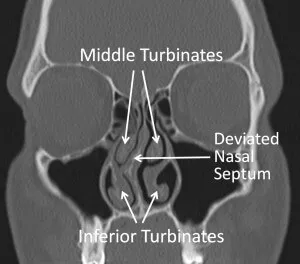
The causes of a deviated septum can be broken down to acquired or congenital (present at birth). Some people are simply born with a deviated septum. Others may develop a deviated septum from a laborious birth or from a chronic condition. Furthermore, a deviated septum may also be a consequence of normal development. As your nose and septum grows, it may begin to lean towards one side as part of its natural growth. Acquired causes of deviated septums can result from injury to the nose such as during a fall, sport, car/bike accident, or some sort of trauma to the nose or face.
The main symptom associated with a deviated septum is nasal obstruction or congestion, in which you have difficulty breathing through one or both sides of your nose. This occurs due to a physical blockage. When the bend in your deviated septum is significant enough or severe enough that it is in contact with the other side of your nose, the passage of air through your nose is obstructed and, thus, you feel difficulty with nasal airway breathing. Other associated symptoms may include headaches or facial pain/pressure, sporadic nosebleeds, snoring, or sleep apnea. A deviated septum can also block your sinuses and cause sinus infections.
A comprehensive medical history and physical exam with close examination of the outside and inside of your nose is undertaken to properly diagnose any issues with the nasal septum. Furthermore, to properly identify any issues with the back of your nose, a small endoscope is used to properly visualize the entire septum, front to back, and identify the causes if your nasal blockage. Keep in mind as discussed earlier, a deviated septum need not be the sole reason for difficulty with nasal breathing, There are a large variety of other causes that can cause difficulty with nasal breathing and it is essential that you meet with a provider who will not only be able to address your deviated septum but also any other causes of your nasal obstruction. Dr. Harounian is an expert in all forms of nasal surgery and has extensive experience with many conditions regarding the nasal septum such as a deviated septum. Furthermore, he has wide fund of knowledge with regards to other causes of nasal obstruction and will be able to not only diagnose and effectively treated any issues with your septum, but also diagnose and address any other causes of nasal blockage as well.
Treatment of the deviated septum is varied and depends on your presentation. Simply having a deviated septum alone is not a reason to undergo treatment. If you have a deviated septum but no symptoms, any type of clinical intervention is unlikely to be needed. If you have a mild deviated septum, medical therapy may serve as an option. Nasal steroid sprays, antihistamines, and saline rinses for your nose may be helpful in reducing the congestion enough to allow you to breathe via your nose normally. Keep in mind, such medicines do not actually straighten the deviated septum but may provide sufficient relief. Often, it is not uncommon to begin a trial of these medications to determine if they effectively address your nasal breathing difficulty. If the deviation is severe or medical therapy has failed to adequately address your needs, surgery serves as the gold standard for repairing a deviated septum and restoring your nasal breathing. This surgery is called a septoplasty. Dr. Harounian does not only treat the condition but also treats the patient. He includes all the factors when discussing treatment options with his patients and prefers to have a discussion with his patients on the best treatment plan that is tailored and best suited to meet his patient’s expectations, goals, and needs while still remaining well-informed and involved in the decision-making process.
A septoplasty is typically a same-day outpatient procedure that takes approximately 1-2 hours. The surgery occurs in the nose and it is rare to have any visible incisions on the outside of the nose or face. The surgery mainly consists of three parts:
1. Anesthesia – Typically general anesthesia is used so that you are asleep and comfortable during the surgery.
2. Surgical repair – During the surgical repair, the mucosal membranes that enclose the septum are separated. Subsequently, the deviated portions of cartilage and bone are removed and the mucosal membranes are then placed back together. The nasal passages are then assessed to assure they are open.
3. Bandaging/dressing – You may have some packing/bandages and sutures on either the inside or outside of the nose depending on the extent of the surgery.
There are a variety of risks associated with septoplasty.
1. Bleeding
2. Infection
3. Risks of Anesthesia
4. Septal perforation – a hole develops in septum
5. Need for additional or revision surgery
6. Persistence of nasal obstruction and/or symptoms
7. Continuation of medical therapy after surgery
8. Change in smell or taste
9. Allergic reaction
10. Scarring
Fortunately, they are rare but it is important to be informed of any possible risks. Dr. Harounian has extensive training with nasal surgery and takes every precaution to reduce the chances of a risk occurring.
As septoplasty is an outpatient procedure; thus, you will go home the same day. You may feel some soreness and notice some bruising in addition to mild swelling on your nose for a couple of weeks. During this time, it may be difficult or uncomfortable to breathe through one or both sides of your nose as healing continues and the swelling subsides. You may have other types of surgery in conjunction with your septoplasty. Depending on the additional procedures, the recovery time may be a little longer. Dr. Harounian rarely needs to use packing inside the nose after surgery and patients can generally breathe through the nose very soon afterward. In most cases, you will be able to go back to work within the first week but avoid any physical exertion or heavy exercise for 2 to 3 weeks. Most patients fully recover within a month after septoplasty.
Fortunately, nasal surgeries such as septoplasty that are meant to improve the breathing function of your nose are typically covered by most insurances. Dr. Harounian is a strong believer in making sure his patients are always informed throughout the entire process starting from diagnosis to treatment. His office will perform a full check of your insurance plans and inform you well ahead of time of any financial responsibilities that you may have. We do our best to avoid any surprises and all effort is taken to not only meet, but exceed your goals and expectations.